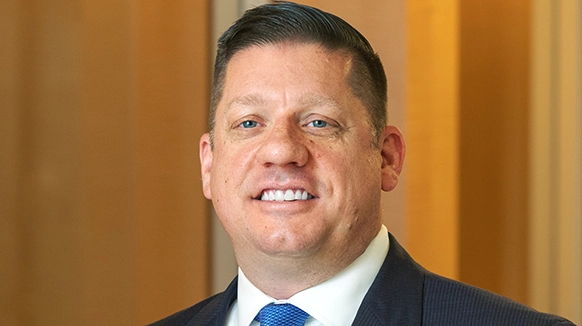
Haynes Boone Partner Jon Bowser authored an article for Westlaw Today discussing the U.S. Patent and Trademark Office's new Pre-Order Procedure for ex parte reexaminations, and its controversial waiver of rules that previously limited patent owner participation.
Read an excerpt below.
Patent litigants are increasingly relying on ex parte reexamination (EPR) proceedings to challenge the validity of issued patents, shifting away from inter partes review (IPR) proceedings which allow greater participation by the patent challenger. As discussed in my recent article, this shift to EPRs is due to the expansion of policies under USPTO Director John Squires and Deputy Director Coke Morgan Stewart to discretionarily deny IPR petitions.
The number of EPR requests filed this year through May 15, 2026, now exceeds the number of IPR petitions filed in the same period, which is the first time this has happened since patent litigants began filing IPRs in September 2012.
In an EPR, the USPTO will order reexamination of a patent if the challenger raises a "substantial new question of patentability" (SNQ) that affects any claim of the challenged patent. (35 U.S.C. § 302.). In many EPR proceedings, a third party challenges issued patent claims based on new prior art or new combinations of prior art that the USPTO had not considered previously. The Patent Act provides that the USPTO Director determines whether to order reexamination of a patent (Id. § 302(a)).
However, the USPTO's regulations delegate that determination to an examiner (37 C.F.R. § 1.515), typically an examiner in the USPTO's Central Reexamination Unit (CRU). If a CRU examiner determines that an SNQ exists, reexamination of the challenged patent is ordered, and then the challenged claims of the patent are examined again. (37 C.F.R. § 1.550.)
On April 1, 2026, Director Squires established a new "Pre-Order Procedure" that permits patent owners to submit information to the USPTO before a CRU examiner decides whether an SNQ exists in an EPR proceeding. This new procedure is controversial because it conflicts with existing regulations governing a patent owner's participation in the early stages of reexamination.
To read the full article from Westlaw Today, click here.