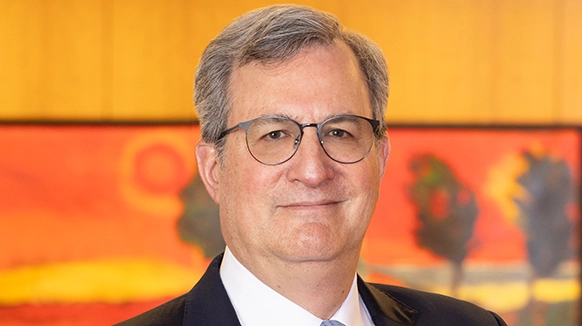
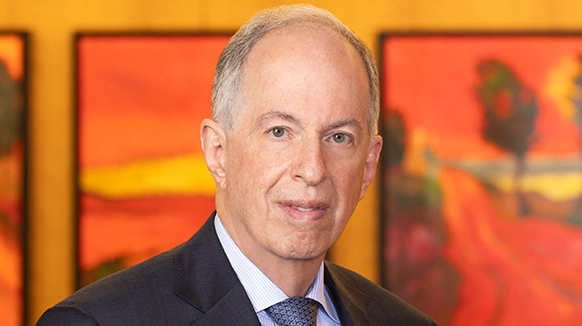
Meet Haynes Boone Partners Jeffrey Moerdler and Stephen Friedberg, based in the firm’s New York office. The pair joined Haynes Boone in December 2025 to lead and grow the Data Center and Digital Infrastructure Practice Group. Moerdler and Friedberg have practiced together for more than 35 years, bringing deep industry knowledge and a long-standing collaborative approach to the firm.
In this Q&A spotlight, they discuss the evolution of data center and digital infrastructure development, key market trends and what developers, investors and enterprise users should consider to position their projects for long-term success.
Can you describe your data centers and digital infrastructure practice?
Our data center practice is broad and has been a key part of our focus since 1990, when we represented a Fortune 100 financial services client in the development of its first two carrier hotels (another name for data centers). Since then, our practice has encompassed ground-up development, redevelopment of buildings into data centers, leasing of data centers for landlords and tenants, financing and joint ventures for data centers, negotiating economic incentives, power purchase agreements and water rights for our clients with our energy colleagues, and advising our clients on building their own power plants with our project finance colleagues (“behind-the-meter”).
Until the last few years, most of these transactions were developments encompassing 25-200 megawatts. In the past few years, we have assisted our clients in numerous powered land assemblages, ground-up developments and leases encompassing thousands of acres and hundreds of megawatts to gigawatts of power for individual sites.
Our digital infrastructure practice also includes installation of distributed antenna or in-building wireless systems, radio and TV station antennas and studios, rooftop antennas, tower leases and development in solar, battery storage and other energy infrastructure matters.
What drew you to building and leading this practice at Haynes Boone?
We needed a firm that has the many practice areas that support the increasingly complex financing and operation of data centers. That includes energy and real estate, where Haynes Boone is robust and well-respected. Equally important is that the firm is based in Texas, and much of the energy expertise is there. Although we have represented clients in most states, Texas is now seeing the most new data center development and is likely to surpass Virginia with the largest concentration of data centers in the world in the next few years.
What trends are you most focused on right now in data center development and investment?
The biggest is powered land assemblages. The vast amount of capital required for hyperscale data centers (including costs of land, equipment and power) is exponentially larger than in past years (often in the billions). Savvy property owners are raising the price of suitable land to new heights. Utilities are asking for large letters of credit to secure payment for improvements needed to supply power and to guarantee that the power capacity being built and reserved will be utilized and paid for. This has resulted in many developers creating assemblages that include options or purchase agreements for land, coupled with reservations of power, site plan approvals and economic incentives as a package that can be flipped at closing to a hyperscaler or a developer who will incur the capital expenses to actually build and lease the site to one or more hyperscalers or AI companies.
Many of our clients have also turned to development of their own private or behind-the-meter power plants either to supplement or replace direct connections with utilities because of the unavailability of sufficient power or the inability of utilities to meet our clients’ need for timely power buildouts.
Beyond all of this, water has become a rising concern because of the need to manage the increasing heat generated by AI and cloud-computing equipment. Not only must a data center developer obtain sufficient water for cooling, but it also must address both its cost and the preservation of this resource.
How does advising on data center projects differ from more traditional real estate or infrastructure matters?
These are complex and expensive projects that include sourcing power, water and fiber, construction of substations and overcoming local opposition, technically complex leases or master services agreements (MSAs) and performance-based service-level agreements (SLAs) with customers, in addition to acquisition, construction and financing.
We are seeing more opposition to these developments, which is often based on little information about the benefits of these transactions and their positive impact on the economy (and how essential they are to our digital lives). Some of this was caused by the industry’s inherent secrecy concerns, because of the sensitive information housed in these facilities. This is changing because of the pushback and moratoria in a few jurisdictions.
Finally, leases for these properties are complex, given the mission-critical nature of much of the data being processed in them, and we have negotiated hundreds of them (mostly for landlords but also for larger tenants). This takes a good deal of experience and technical knowledge that the two of us have gained over the last 36 years.
What should developers, investors and enterprise users be thinking about now to position their data center platforms for long-term success?
They should be looking at the sources of capital for acquiring, building and financing their operations, as well as paying for expensive tenant fit-out requirements. They should make sure their data centers are positioned properly to be attractive to tenants (both on cost and reliability). Redundancy is the key to data center operations, and the more redundancy in the design and implementation of a data center, the higher the rent a landlord can charge and the less chance for service-level risks (and the easier it will be to attract tenants and to finance these projects).
Parties must be aware that costly equipment will have to be replaced over time, and new trends or needs (like water cooling, which is increasingly replacing or supplementing air cooling) have to be financed. This requires deep-pocketed financial partners and financing sources.
Tenants have to assess:
- Their needs and how critical and time sensitive their data is.
- The design of the data center and how it meets their requirements, so they don’t overpay for service needed by an AI or a critical-mission data center tenant, if that isn’t needed for their businesses.
- The experience of the landlord or data center operator to make sure of its reliability.