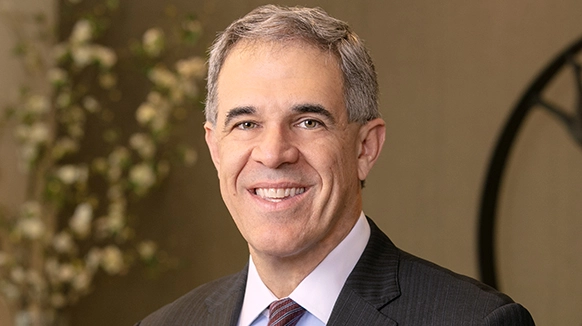
In a chapter for the Inter-American Dialogue’s “USMCA Energy Commitments: Executive Report and 2026 Review Outlook,” Haynes Boone Partner Larry B. Pascal and Associate Carlos Alva examine Mexico’s evolving energy framework, including the country’s return to state-led planning and the implications of the 2026 USMCA renegotiation.
Read an excerpt below.
Over the last decade, Mexico's energy sector has experienced profound changes - first with the opening of the energy sector to private investment during the Enrique Peña Nieto administration, followed by a counter-reform and recentralization under the administration of former President Andrés Manuel López Obrador, and now with President Claudia Sheinbaum, with energy reforms enacted in 2025. The upcoming renegotiation of the USMCA, combined with these new national energy policies in Mexico, represents an important moment for Mexican economic development.
The 2013 energy reform enacted by the government of former President Peña Nieto was intended to consolidate Mexico's energy market opening to private investment. Principally in the oil and gas sector through the execution of exploration and production contracts (“E&P contracts”) awarded in public bidding rounds, and the entry of private companies into the retail gasoline sector, which historically was dominated by Pemex. In the power sector, the Peña Nieto reforms allowed private –including foreign companies to participate in power generation, marketing, and supply activities as well as the creation of the Wholesale Electricity Market to promote fair competition in the power sector.
However, starting in 2018 with President López Obrador's six-year term, energy policy took a sharp turn, shifting from an opening to private investment to strengthening Pemex and the state-owned power company, CFE. It also limited foreign investment in the energy sector by suspending future upstream bid rounds, delaying regulatory approvals, and issuing policies that favored Pemex and CFE. In the oil and gas and power sectors, tenders for E&P contracts and power projects were canceled, and permits for foreign companies to develop energy activities were suspended or delayed, halting projects under development.
Read the full Inter-American Dialogue Report here.