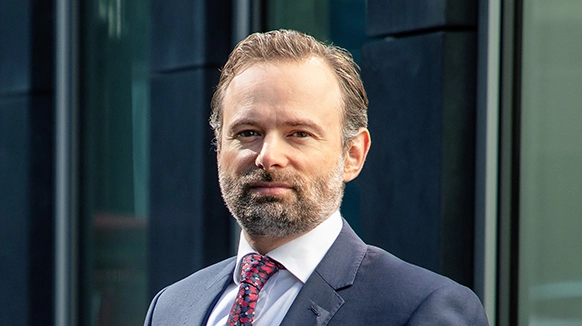
Partner Andreas Dracoulis and Counsel Jonathan Morton’s article published in Mealey’s International Arbitration Report discusses the major challenges for arbitration In 2025.
Read the full article response below.
A commentary reprinted from the March 2025 issue of Mealey’s International Arbitration Report.
Mealey’s International Arbitration Report recently asked industry experts and leaders for their thoughts on what the major challenges for arbitration in 2025 might be. We would like to thank the following individuals for sharing their thoughts on this important issue.
- Jesse Sherrett, Partner, Sterlington, New York
- Luis Perez, Chair, Latin America and the Caribbean Practice, Akerman, Miami
- Jonathan Morton, Counsel, Haynes & Boone, London
- Andreas Dracoulis, Partner, Haynes & Boone, London
- Jonathan Waisnor, Partner, Labaton Keller Sucharow LLP, New York
- Peter Rosher, Partner and Global Chair, International Arbitration, Reed Smith, Paris
- Jovana Crncevic, Special Counsel, Withers, New York
- Alex Haden, Senior Associate, Withers, New York
- Wade Corriell, Partner, King & Spalding, Singapore and Houston
Mealey’s: What do you believe will be the major challenges for arbitration in 2025?
The use of arbitration as an efficient and cost-effective method of dispute resolution continues to grow globally. Growth inevitably brings change. Change is also being brought about by an increasingly complex world, with sanctions, conflicts, AI, elections in key arbitral locations, and changes to global patterns of trade all impacting on both the way companies do business and the way they resolve disputes. The complexity of our world grows exponentially and at unprecedented speed. Adapting and responding to such change in a manner that increases certainty and clarity, but minimises risk, will be a major challenge for international arbitration institutions in 2025.
From a UK perspective, there has been a notable increase in the arbitration caseload over the last few years of the two London based arbitration forums — the London Court of International Arbitration (LCIA) and the London Maritime Arbitrators Association (LMAA) in particular. It remains to be seen, however, whether this will continue, and how the new Labour Government will enact its stated aim to promote arbitration.
In this respect, the Arbitration Bill to reform the existing Arbitration Act 1996 has been re-introduced and is working its way through the parliamentary process. This Bill will, in part, attempt to strengthen arbitrators’ powers to make summary awards, codify the arbitrators’ duties of disclosure and generally seek to make English-seated arbitrations more attractive to global business. This process is slow, however, and it risks being outdated before it has even been enacted.
A particular difficulty in this respect relates to how to deal with AI. Much has already been written on the challenges and opportunities arising from the rapid development of generative AI. It is likely, as with all such disruptive technologies, mistakes will be made, and AI used in ways which cause unanticipated problems. Accuracy and privacy are particular concerns. If Arbitral Rules do not adapt and keep up, both Arbitral Institutions and their users may be exposed to considerable risk. It is notable in this respect that both JAMS and the Stockholm Chamber of Commerce introduced rules or guides on the issue in 2024 but, as yet, no rules dealing with the issue have been put forward by the other major institutions. It is likely that they will do so during 2025.
It is essential that any such steps are taken with an eye to the rapidly changing future and not the status-quo. Proactivity from Arbitral Institutions rather than reactivity is vital in order to meet these challenges head on.
Read the full report here.