Haynes Boone recently hosted its inaugural 30 Block: Crypto & Compliance Forum, bringing together digital asset market participants, lenders, issuers, infrastructure providers and institutional and retail leaders to discuss the evolution of digital asset markets. Across the forum’s four panels — Lending and Securitization, Off-Exchange Settlement, the Future of Derivatives Documentation and Markets, and Tokenization of Real Assets — participants discussed how digital asset markets are increasingly adopting institutional structures and operational frameworks typically associated with traditional finance but maintain their technical and operational advantages. Below are key takeaways that emerged throughout discussions.
Traditional Finance and Digital Assets Continue to Converge and Rate Compression
Across multiple panels, participants emphasized the growing convergence between traditional financial markets and digital assets markets. Recurring themes included expansion of institutional-style collateral structures, greater adoption of traditional finance documentation concepts, increased focus on operational controls and governance, and growing participation from traditional hedge funds, registered funds and institutional investors. Panelists consistently described the digital asset ecosystem as entering a more mature phase, in which institutional expectations surrounding risk management, transparency and operational discipline are increasingly shaping market structure and transaction design. Participants noted that the convergence of the traditional securities markets with the digital asset market has caused major infrastructure providers, including DTCC and NASDAQ, to move forward with significant projects focused on bringing securities settlement and listing onchain.
Participants also discussed continued rate compression as more institutional capital enters the space, observing that pricing discovery remains difficult because many transactions are still privately negotiated and lack standardized benchmarks.
Documentation Standardization Remains a Priority
Panelists repeatedly returned to the need for greater standardization across digital asset lending documentation and market infrastructure. Participants noted that even market-standard digital asset lending transactions often require substantial bilateral negotiation. Comparisons were drawn to ISDA and LSTA frameworks in traditional finance, and speakers suggested that standardized documentation could reduce friction, improve transaction speed and support broader institutional adoption. As one speaker observed: “We already know all the things that we agree on, and we can just talk about the things we disagree about.”
One panel focused entirely on the derivatives market and how to increase standardization. Some discussions focused on whether ISDA could leverage concepts from the existing Digital Asset Definitions. Although that definition booklet was intended to create standardization, the market moved toward trading digital assets under already existing definition booklets, notably the 1998 FX Definitions, 2002 Equity Definitions, and the 2005 Commodity Definitions.
One suggestion discussed was to leverage concepts across these booklets and create an annex to one or more booklets to update the legacy definition booklet(s) to be better suited for the purpose of trading digital assets. Panelists also discussed exchange trading of non-cleared swaps and the opportunity to accelerate this market through greater standardization and coordination among dealers if the Clarity Act passes.
Lending and Securitization Markets Are Maturing
Panelists discussed how the digital asset lending market has evolved significantly since the “crypto winter” of 2022. Lenders and borrowers alike are increasingly prioritizing transparency, collateral protection and institutional-grade operational structures — including non-rehypothecation lending agreements, tri-party collateral models and SPV and securitization-style financing frameworks. Custodial technology and collateral transfer capabilities have become central diligence issues, with liquidation timelines and margin periods of risk significantly impacting transaction structure and loan economics.
24/7 Operations
One of the strongest operational themes throughout the lending discussion was the challenge of adapting traditional institutional workflows to the always-on market structure of the digital asset ecosystem. Many traditional institutional investors entering digital asset markets are not operationally designed for continuous collateral management, weekend margin calls or real-time settlement expectations. Crypto-native firms described 24/7 operational capabilities as a meaningful competitive advantage, with one panelist noting: “It’s our moat.”
Off-Exchange Settlement and Post-Trade Infrastructure
The off-exchange settlement discussion focused on how digital asset markets are re-evaluating the role of intermediaries and post-trade workflows. One panelist summarized the evolution by observing that crypto initially embraced the idea that intermediaries were unnecessary, but “people realized maybe we really do need intermediaries.” Institutional adoption is driving interest in more segmented and specialized infrastructure models, and concepts such as T+1 settlement cycles, central clearing and coordinated settlement workflows continue influencing conversations around market structure.
Looking Ahead
Taken together, the discussions at 30 Block pointed to a digital asset market that is rapidly institutionalizing — adopting the documentation, infrastructure and risk-management frameworks of traditional finance while preserving the operational characteristics that distinguish it. Panelists suggested that firms capable of combining technological innovation with institutional-grade legal and operational infrastructure will be best positioned as the market continues to mature.
Thank you to the outstanding panelists and industry leaders who shared their perspectives throughout the forum, including Max Bareiss of Galaxy Digital, Dhruv Patel of Arch Lending, Emily Sutherland of Cor Prime, Adam Lapayover of FalconX, Mark Brickell of Clear Markets Holdings, Inc., Timothy Bowler of ICE, Chris Soriano of Bridgeport, Rene Van Kesteren of SwapGlobal, Ryan Louvar of WisdomTree and Nader Souri of BNY.
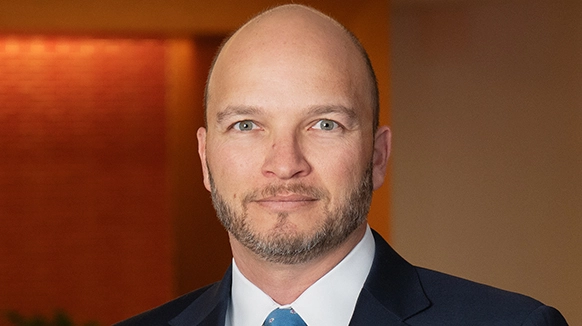
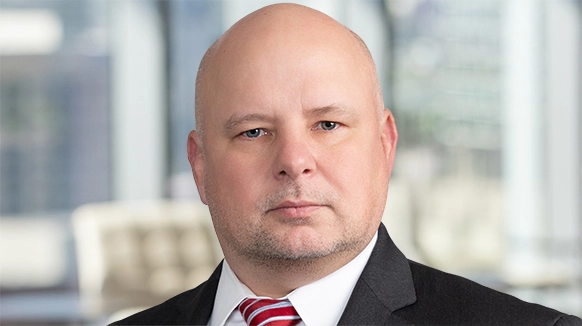
We also thank Haynes Boone Partners Matthew Frankle, Alexander Grishman, Edward Ivey and Richard Kerr for leading the discussions and contributing insights on the evolving legal and commercial landscape surrounding digital assets, lending, derivatives and tokenization.