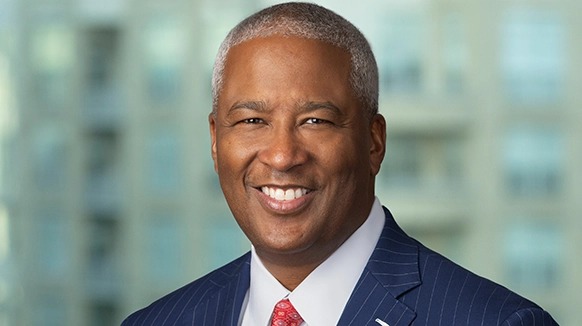
In a new piece for the New York Law Journal, Haynes Boone attorneys Victor Vital, Gabriel Berg and Chelby Sterling and Becky Fuentes of R&D Strategic Solutions tackle a challenge every trial lawyer recognizes: how to guide jurors toward fairness when politics and polarization are louder than ever.
They argue that the path forward runs through empathetic voir dire, trial themes rooted in fairness and law and strategic use of jury instructions as neutral guideposts. The result is a deliberation room where jurors can move past personal viewpoints and focus on the evidence.
Read an excerpt from the article below.
A. Voir Dire: Identify, Normalize, and Invite Candor
Voir dire remains one of the most important opportunities to shape a fair trial, but polarization and the modern information ecosystem have complicated what we can reliably detect. Some jurors who hold strongly ideological or conspiratorial views now proudly self‑identify. Others may not. And some jurors whose views are not extreme nevertheless feel socially vulnerable when asked to reveal their leanings in a public courtroom.
That is why how we ask matters just as much as what we ask.
The goal is never to alienate or “other” jurors. It is to create the kind of psychological safety that makes honesty possible. One of the most effective tools is normalizing bias. A simple story, such as a lawyer describing why she would be a terrible juror in a case involving her former firm where she had a miserable experience, models vulnerability. It signals that everyone has opinions based on their personal experiences, and that there is nothing “wrong” with that. When lawyers present themselves as humans with preferences, jurors feel permission to do the same.
…
B. Trial Themes in a Polarized Age: Aim for the Shared Middle
In a hyper online world, it’s more likely that a juror has encountered conspiratorial narratives touching the case. You can’t pre-litigate the Internet in voir dire, but you can defang conspiratorial frames by focusing relentlessly on what is in evidence and what the instructions permit. Name the boundary: “There are lots of claims out there. The only thing that matters here is evidence that is admitted and the rules the judge gives you.”
Once the panel is seated, trial themes must operate differently than they once did. Themes that sound like political arguments, even inadvertently, risk alienating jurors on both ends of the spectrum, and jurors are exhausted with “spin.” Today, the themes that resonate most are those that reflect fundamental underpinnings of our jury system: fairness, rules, common sense and consensus.
The key is to prime jurors to understand that the judge’s instructions—not personal beliefs, not headlines, not online narratives—are the neutral guardrails for the case. When lawyers repeatedly link their themes to the language that will appear in the jury charge, they set the stage for jurors to gravitate toward those neutral anchors later.
…
C. The Deliberation Room: Let the Instructions be the “Bad Guy”
Polarization follows jurors straight into the deliberation room. Many modern juries contain a blend of strongly fixed, ideologically driven jurors and others who are open to weighing evidence collaboratively. When disagreements in that room become personal, emotional, or rooted in identity, progress stalls. That is why one of the most powerful tools available to jurors today is redirection. And the best thing to redirect to is the judge’s instructions.
Jurors still view the judge as a neutral authority whose rules must be respected. When deliberations heat up, the instructions operate as a way to redirect the conflict away from the individuals and toward the shared framework everyone must follow. Instead of challenging another juror’s worldview, a bridge‑building juror can say: “I’m not saying you’re wrong. This is just what the Judge told us we must follow.”
In other words, the instructions become the “bad guy”—the external reference point that removes ego and identity from the disagreement, allowing jurors to shift their position without looking weak. A person does not have to say, “I was wrong,” or feel like they’re betraying their politics or personal beliefs. Instead, they can say, “I’m following the rules; I’m doing my duty.” That framing makes compromise psychologically possible.
…
D. Why This Still Works: The Jury’s Enduring Strength
Polarization has undeniably changed jury work. But it has not undermined the fundamental strength of the jury system. With thoughtful voir dire, emotional intelligence, and disciplined reliance on the judge’s instructions, jurors can still find their way to fair outcomes.
Read the full New York Law Journal article here.