The Fund Finance Association recently held its 2026 Global Leadership Summit in Portugal, gathering fund finance professionals from across the industry to discuss the trends, challenges and opportunities shaping the market. The symposium provided a valuable forum for candid dialogue on topics ranging from the evolving lending landscape to the structural and regulatory developments affecting fund finance participants. We were grateful for the opportunity to attend and engage with fellow industry leaders throughout the conference.
Five Haynes Boone partners participated in the symposium, each coming away with distinct perspectives on where the market is headed. Below, they share their reflections on the conversations and themes that resonated most during their time in Portugal.
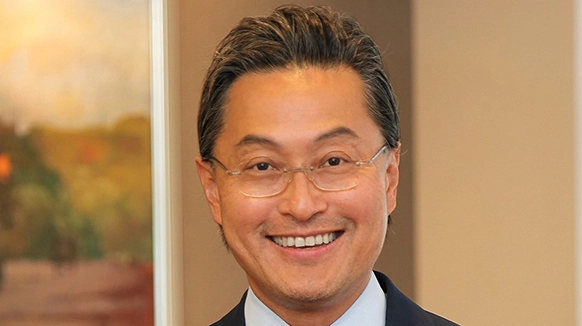
Albert Tan, Partner and Global Head of Fund Finance
“A central theme discussed among the industry participants at the leadership summit was the impact of the current rate environment on private capital. The combination of the Fed’s rate hikes and a flattened yield curve has created a highly restrictive operating environment for funds, because for leverage to be accretive, a steep yield curve is essential to allow funds to borrow at cheap, short-term rates to invest in higher-yielding, long-term private assets. With borrowing costs rising and the spread between those costs and asset yields converging, the cost of leverage is closing in on, and in some cases exceeding, the yield of the underlying assets, which several attendees acknowledged will likely lead to dividend cuts and limitations on distributions. Higher borrowing costs have also significantly hampered M&A and IPO activity, and because private capital funds are mostly closed-end vehicles with a fixed pool of capital, the lack of exits from older investments is curtailing funds’ ability to return cash to investors. As a result, a number of funds find themselves in a holding pattern, unable to sell assets at desired prices and unable to raise new capital. To adapt, some are turning to NAV facilities to lengthen the time horizon for harvesting older investments and offer synthetic distributions. Others are pivoting to evergreen fund structures that allow for periodic liquidity windows and smoother capital deployment, reducing reliance on short-term borrowing markets.”
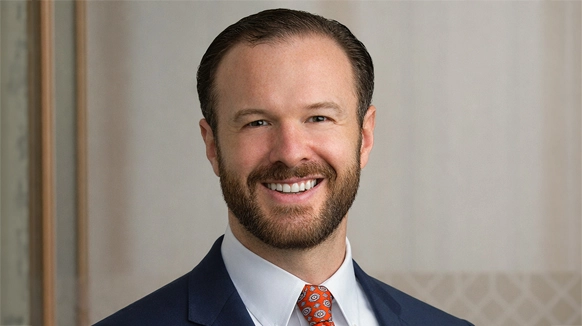
Brent Shultz, Partner and Co-Head of Fund Finance
“In conversations throughout the summit, the fundraising environment was a recurring theme. The consensus among attendees was that while fundraising remains challenging, firms delivering strong DPI are finding real investor appetite. Many attendees noted a meaningful uptick in separately managed accounts as LPs look for more tailored exposure, even as traditional commingled fundraising has been tougher. Private credit continues to generate real enthusiasm from institutional investors, though several people acknowledged the growing pains that come with it being a relatively new asset class. Some of the retail capital that flowed in early is proving less durable in the short run, but there was broad optimism among attendees that retail investors will be an increasingly important source of capital for all private funds going forward. One dynamic that came up in multiple discussions was the desire of certain LPs, particularly insurance companies, to invest across both debt and equity, which is creating interesting structuring conversations on the fund finance side when an LP is possibly both an investor and a credit provider to the same fund. Across the conference, lenders were actively discussing new product lines within fund finance, and NAV lending and securitizations were among the most talked-about areas of continued growth.”
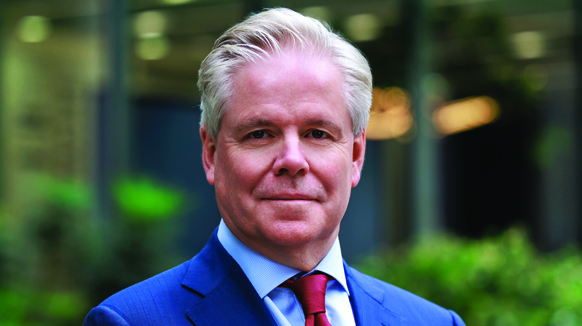
Jeremy Cross, Partner
“The conference was exceptionally well organized, and the FFA deserves recognition for creating a rare opportunity to connect with many of the industry's leading players in a relaxed and informal setting. Conversations were open and wide-ranging throughout. Much of the formal programming focused on broader political and economic issues and the rise and future of AI, rather than on fund finance specifically. Where fund finance took center stage, the general mood was one of cautious optimism, with a consensus around continued availability of liquidity and further diversification and maturation of NAV financing, term loans for subscription finance and rated feeders, among other products. That optimism was tempered by concerns about pricing pressures, broader political and economic headwinds, and some uncertainty about AI's potential impact on the industry. On that front, there was a prevailing view, expressed particularly by the economists panel and the AI speaker, that the present and future landscape may not be as bleak as it is sometimes painted.”
Emily Fuller, Partner
“Panel discussions focused on the unpredictable political situation the world is currently in, with the main takeaway being that in the absence of being able to predict geopolitical outcomes, the best course of action is to prepare for all eventualities. AI is changing the world at a pace that is hard to keep up with, and in 20 years, we will barely recognise the way we work now. The race between the U.S. and China to become the world leader in AI means that precautions that should be considered often are not given the deliberation they warrant, but the efficiencies AI brings create opportunities for job roles to develop and become more specialised, rather than making more menial roles completely redundant. Attendees discussed how the NAV market is no longer a developing product, but is a mature solution that many funds now fully integrate into their liquidity management. CFOs are increasing in popularity, especially in the North American market. Relationships remain key for new names in the market looking for financing.”
Javier Martinez, Partner
“The FFA Leadership Summit evidenced that industry leaders continue to be thoughtful, intentional and creative in shepherding market development and growth. Demand for NAV loans, CFOs and hybrid facilities highlights market desire for tailored solutions. Subscription lines are not going away, but more and more lenders than ever before are building out their platforms and expertise in these areas to accommodate demand. Rather than standardization of the products, the market is leaning towards flexibility to facilitate sponsor needs and the increased use of evergreen and continuation vehicle structures.”
The conversations in Portugal reinforced that the fund finance market continues to evolve at a rapid pace, with new structures, participants and regulatory considerations emerging on a regular basis. Staying current with these developments is more important than ever for sponsors, lenders and fund managers alike.
For those looking to stay plugged into what's happening in the market, we invite you to join us for NAVigate in London or NAVember in New York City, our annual conferences that dive into NAV lending and related fund finance topics. We also encourage you to review our Annual Report from April and our recently issued Fall Report, which offers a comprehensive overview of the key trends and developments shaping fund finance.
Please reach out to any of the Haynes Boone fund finance team with any questions or to discuss any of the topics covered in this alert.