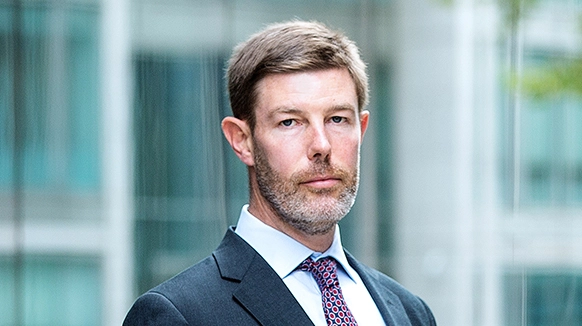
Haynes Boone attorneys Conrad Purcell, Shu Shu Wong, Kayley Rousell and Ziv Gould authored an article for the Spring edition of Global Hydrogen Review examining how the Middle East and North Africa region is becoming a prominent player in the green hydrogen market.
Read an excerpt below.
The global energy industry is undergoing a transformative shift, driven by the urgent need to cut emissions and accelerate the transition to sustainable, renewable energy sources. Across the Middle East and North Africa (“MENA”), countries are setting ambitious net-zero targets, such as the United Arab Emirates (“UAE”), Bahrain, and Saudi Arabia. This signals a regional commitment to sustainable energy and a low-carbon future.
The MENA region holds nearly 60% of the world’s oil reserves, and approximately 40% of the world’s natural gas resources. The oil and gas industry is also deeply intertwined with hard-to-abate (“HTA”) sectors, such as drilling, petrochemicals, and heavy transport, all of which are inherently difficult to decarbonise, due to their strong reliance on fuels which cannot be easily replaced by low-carbon alternatives. However, owing to its chemical characteristics and potential, hydrogen offers a key pathway to achieving decarbonisation, which is particularly beneficial in the context of industries which are difficult to electrify.
In an effort to attain their net zero commitments, 15 countries from the MENA region have invested in excess of USD$150 billion to mass-scale hydrogen production, representing one of, if not the most, ambitious hydrogen hubs worldwide. Such sizeable monetary investment and ambitious net zero commitments can only succeed when supported by clear, stable government policy and regulatory framework, such as the UAE’s Energy Strategy 2030, Saudi Arabia’s Vision 2030, and Oman’s Hydrom, which will be explored in greater detail below.
Hydrogen Market Across the MENA Region – As it Currently Stands
The MENA region has emerged as one of the most dynamic global hubs for green hydrogen investment and production. The region aims to produce nearly 10 million tonnes of hydrogen annually by 2030, focusing predominantly on green hydrogen. This production target is enabled by more than 110 hydrogen projects taking place across the region, over 90% of which are dedicated to green hydrogen. Whilst all the MENA countries are playing their part in its repositioning as a global leader in the field, a number of countries in particular, for their project count, ambition and investment, are worth considering in further detail. Backed by billions of dollars in planned investment, these endeavours leverage the region’s abundant solar resources and existent export-oriented infrastructure to ensure globally competitive, green hydrogen production. Yet, realising this potential depends heavily on scaling up renewable energy capacity, as the primary method for the production of green hydrogen lies in the process of electrolysis powered by clean electricity. In addition, mass-scale hydrogen production relies on the foundations of supportive regulatory and export frameworks, without which the region’s hydrogen ambition will not be possible.
Green hydrogen is produced through the process of electrolysis, which uses renewable electricity to split water into hydrogen and oxygen. Consequently, renewable energy sources, such as wind, solar and hydropower are essential to provide the clean electricity required for large-scale green hydrogen production. The MENA region is geographically well positioned, with intense and reliable sunlight, and flat land with strong winds. 10 of the 15 global countries with the best solar potential are situated in the MENA region, and the average sunlight in Dubai is amongst the highest globally.
Saudi Arabia is the MENA region’s frontrunner to produce the largest volume of hydrogen by 2030. Saudi Arabia is host to several hydrogen production projects, with the flagship Neom Green Hydrogen Project being the most prominent. The NEOM plant alone is anticipated to produce 600 tonnes of hydrogen daily, with the country expecting to produce 4 million tonnes of clean hydrogen annually by 2030. Currently, Egypt leads the way in the region for the number of planned projects, with a total of 38, the majority of which focus on producing green hydrogen, and once operational, will generate an estimated annual production capacity of 3.8 million tonnes by 2040. The UAE has approximately 10 hydrogen production projects in development and construction, with the aim of producing 1.4 million tonnes of hydrogen capacity annually by 2030. Oman is actively developing a number of green hydrogen production projects, with the aim of delivering 1 million tonnes of output annually by 2030.
To read the full Spring edition of Global Hydrogen Review, click here.